GodPlan ERP
One system for the parts of running a company that usually sprawl across four tools and a spreadsheet, employees, attendance and leave, payroll, tasks and CRM. Architecture and full-stack build at PT. Gajah Terbang Kreatif, and built for the phone too.
The work, in short.
RoleArchitecture and full-stack build
- 01
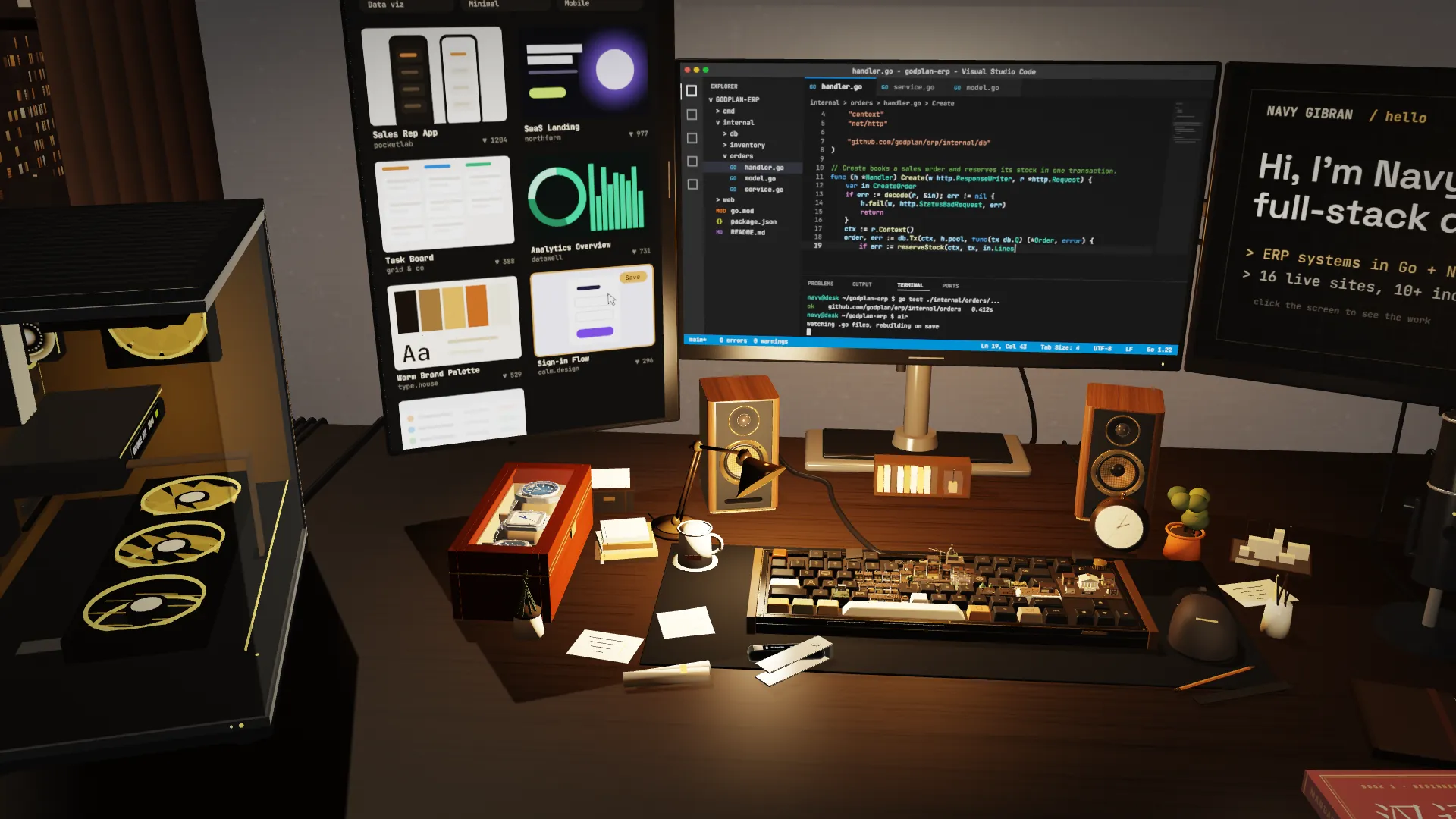
The architecture. Go services on PostgreSQL, a Next.js and TypeScript front end, shipped in Docker
- 02
Authentication and the employees module, with headcount carried up to the dashboard
- 03
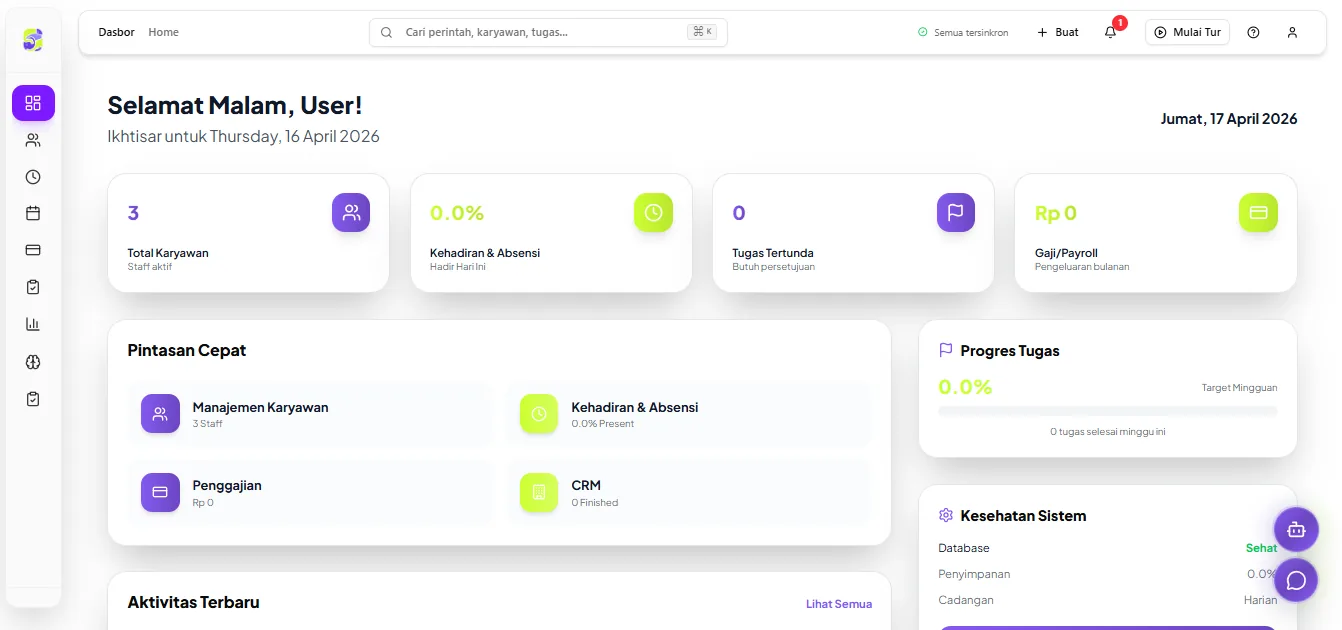
The dashboard, headcount, today’s attendance, pending tasks and monthly payroll on one screen
- 04
System health (database state, storage, backups) reported in the interface instead of buried on a server
- 05
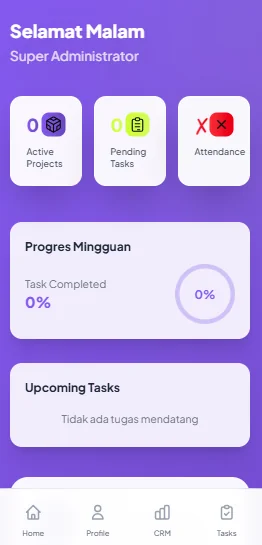
Built for the phone too
- Dashboard
- Employees
- Attendance & leave
- Payroll
- Tasks
- CRM
- System health
The problem, and what I decided.
The parts of running a company that usually sprawl across four tools and a spreadsheet (employees, attendance and leave, payroll, tasks and client contacts), brought into one system, with headcount, attendance and payroll on one screen.
The modules follow the way a company runs, employees, attendance and leave, payroll, tasks and CRM each own their data, and the dashboard reads from all of them.
- 01
Go for the services
One compiled binary per service, typed end to end, cheap to run and simple to deploy in Docker. Workforce data is relational and rule-heavy. A strict language keeps the rules honest.
- 02
PostgreSQL as the single source
Employees, attendance, leave and payroll are one connected set of records. A relational database with constraints keeps a payroll line from pointing at a person who does not exist.
- 03
Next.js and TypeScript for the interface
Types on the front end as well, so the screens and the API agree on the shape of every record.
- 04
System health in the interface
Database state, storage and backups are shown where the administrator already is, instead of a server nobody logs into.
- 05
Built for the phone
Every module works at phone width from the start.
How the pieces fit together.
Pick a module to see what travels between it, the API and the database.
One system, every department.
- 01
The dashboard
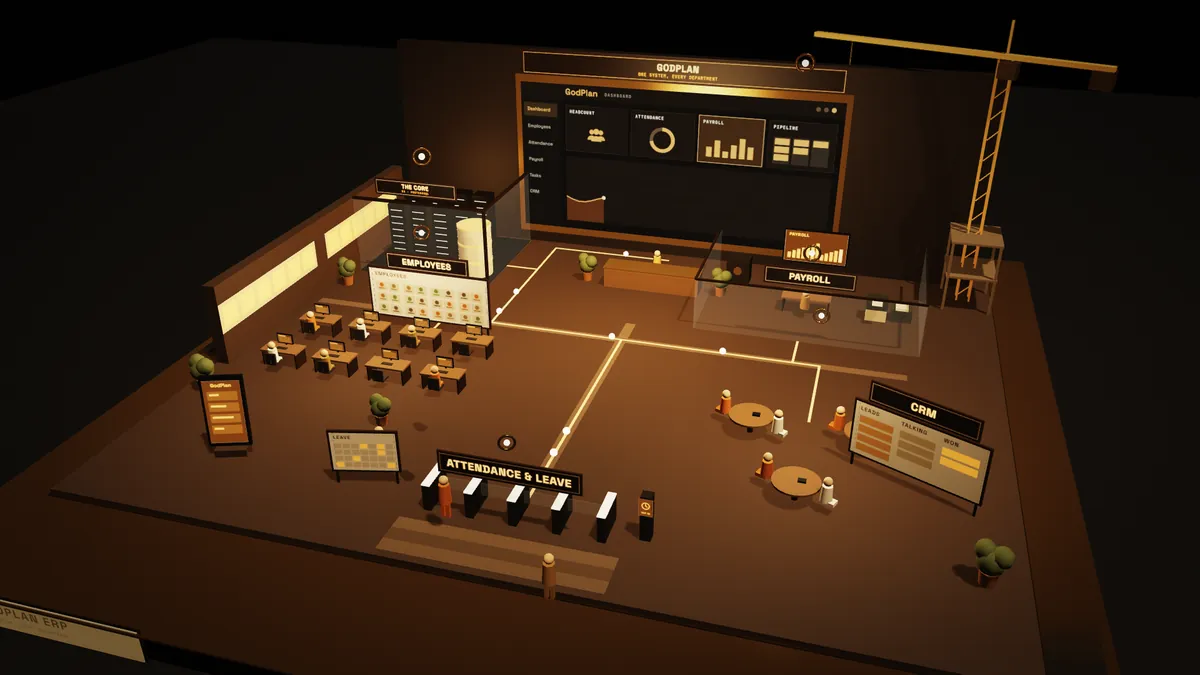
Headcount, today’s attendance, pending tasks and monthly payroll on one screen, with a shortcut into every module. Every corner of its 3D floor is one of them, and the screen answers when something happens there.
- 02
Employees
The staff roster (who works here), with headcount carried up to the dashboard. One of the core features I built, alongside authentication.
- 03
Payroll
Monthly outgoings, carried on the dashboard right beside headcount.
- 04
CRM
Who the company is talking to, its contacts, one shortcut away from the dashboard.
- 05
The core
Go and PostgreSQL behind every screen. System health (database state, storage, backups) is reported in the interface instead of buried on a server.
- 06
Attendance & leave
Daily present/absent tracking, summarised as a rate for the day, with leave handled in the same system.